
Buy a home at a reasonable rate with a VA loan in West Ashley, SC
VA loans were established prior to the end of World War II and have since assisted numerous veterans, service members, and military families in fulfilling their dream of owning their a home. In recent times, the program has become increasingly significant, with VA loan volume skyrocketing and offering substantial financial advantages that enable countless veterans to purchase homes, thereby making homeownership a possibility for those who may not have qualified otherwise.
If you sacrificed comfort and security to help protect our great nation, Mission One Mortgage thanks you for your service. We believe that there's no greater honor than to serve those who have served our country. We're not afraid to go above and beyond for our veterans because that's exactly what they did for us.
Service Areas
What is a VA Loan in West Ashley, SC?
A VA loan is a mortgage option that is backed by the government and available to Veterans, service members, and surviving spouses. It is offered by private lenders such as banks and mortgage companies and not directly by the Department of Veterans Affairs.
VA home loans come with competitive interest rates and terms and can be used to purchase a variety of properties, including:
- Single-Family Homes
- Condominiums
- Multi-Unit Properties
- Manufactured Homes
- New Construction Homes
One of the great benefits of VA loans is that eligible Veterans can buy a home with no down payment, no mortgage insurance, lenient credit requirements, and the lowest average fixed rates in the market.

This program was created by the federal government to make it easier for those who have served our country to become homeowners, and it is widely considered the strongest benefit program available for this purpose.
The VA has a guarantee program that ensures the government will pay back the lender a portion of a VA loan if the borrower fails to make payments. This guarantee reduces the risk for lenders, and as a result, they can offer more favorable terms and require no down payment.
Compared to conventional loans, VA loan rates are typically lower. The rate could either be fixed, meaning payments will remain the same, or adjustable, meaning that payments could change over time. However, keep in mind that adjustable-rate mortgages (ARMs) come with some risk, as you'll pay more if rates rise.
If you are eligible for a VA loan, you can complete the VA mortgage application process through lenders like Mission One Mortgage. While many lenders offer VA loans, not all of them do, and some lenders specialize in serving VA loan borrowers. Generally speaking, it's best to apply with multiple lenders in order to compare rate offers and find the best deal.
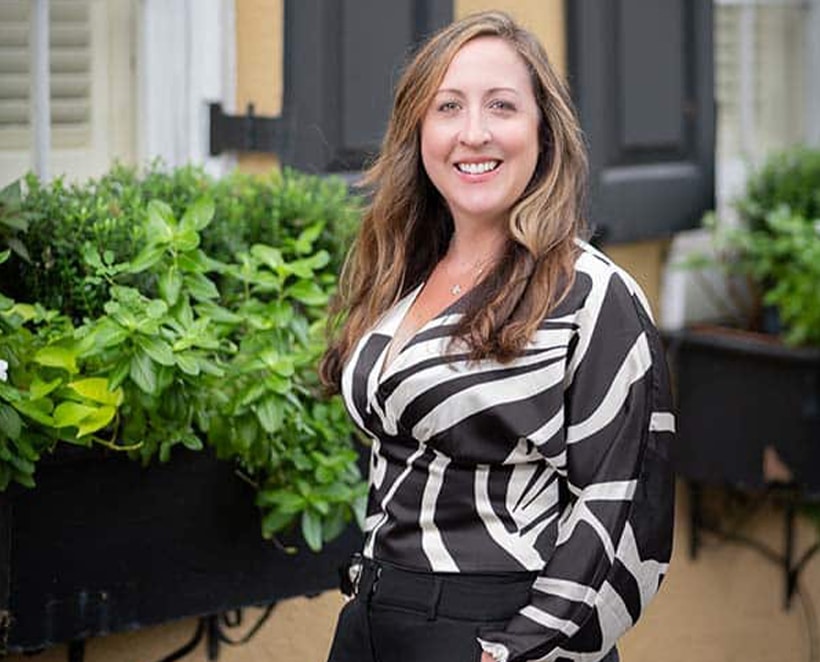
Debbie Haberny, the proud broker-owner of Mission One Mortgage, is a certified Vetted VA Professional. The main objective of her team is to simplify the mortgage process for veterans by providing them with relevant tools and knowledge. Debbie and her team of mortgage experts base their expertise on the VA Handbook and are committed to showing veterans all the options and opportunities available to them with their VA benefits. They also connect veterans with qualified lenders and resources to ensure their VA loan process is seamless.
Whether you're a first-time home buyer or a seasoned homeowner, we'll help you understand the differences between financing programs so you can select the one that's best for you.
What are the Biggest Benefits of Having a VA Loan in West Ashley, SC?
At Mission One Mortgage, we work with many Veterans who know that VA loans exist but don't quite understand the full range of benefits they provide. If that sounds familiar, keep reading. This section was written especially for you.
01
Benefit:
No Down Payment Needed
One of the standout benefits of the VA Loan program is that qualified borrowers can purchase a home without having to make a down payment up to the conforming loan limit of their county. This is a significant advantage over conventional and FHA loans, which typically require minimum down payments of 5 percent and 3.5 percent, respectively.
For example, on a $400,000 mortgage, a conventional loan would require a $20,000 down payment, while an FHA loan would require $14,000. Saving up that kind of cash can take service members and veterans years, but with the VA Loan, they can pursue homeownership without having to scrape and stockpile for years on end.
03
Benefit:
Less Strict Credit Requirements
It's important for military buyers to stay informed about credit score requirements when considering home financing options. Although credit score requirements have eased up a bit, it's still necessary to meet certain benchmarks set by conventional and FHA lenders. However, even meeting these benchmarks can be a challenge for many buyers.
Most VA lenders require a credit score of at least 620, which falls in FICO's "Fair" credit score range. Borrowers will typically need to meet a higher threshold for conventional mortgages, particularly if they want to secure a low-interest rate. It's worth checking out VA Loan rates to learn more about financing options.
Despite common misconceptions, military buyers don't need a perfect credit score to obtain financing. While a higher credit score can certainly help, it's important to remember that VA loans in West Ashley, SC are designed to help military members and veterans access affordable housing.
05
Benefit:
Help with Closing Costs
Closing costs are an inevitable part of the home-buying process, no matter what type of mortgage product you choose. However, if you're a veteran, you may be pleased to know that the VA places limits on the fees and costs you're required to pay at the time of closing. Additionally, homebuyers have the option to ask sellers to cover all loan-related closing costs, as well as up to 4 percent of the purchase price for other expenses like prepaid taxes, insurance, and collections.
02
Benefit:
No Need for Private Mortgage Insurance
Coming up with a down payment can be challenging for both conventional and FHA homebuyers. In addition, they are required to pay for mortgage insurance unless they can make a sizable down payment, usually 20% of the purchase price. For instance, on a $400,000 mortgage, this would be a staggering $80,000 in cash.
FHA loans carry an upfront mortgage insurance premium and annual mortgage insurance. The latter now lasts for the life of the loan. On the other hand, conventional homebuyers will pay this monthly cost until they have built up enough equity, which can take several years.
Fortunately, VA loans do not require any mortgage insurance. However, there is a mandatory funding fee that goes directly to the Department of Veterans Affairs. Borrowers with a service-connected disability are exempt from paying this fee, which helps keep the program going for future generations.
04
Benefit:
Bankruptcy and Foreclosure
If you've experienced a financial setback such as a foreclosure, short sale, or bankruptcy, you may be worried about your chances of securing a VA home loan. However, don't lose hope just yet. With VA loans, it's still possible to be eligible for a home loan just two years after a foreclosure, short sale, or bankruptcy. In some cases, veterans who file for Chapter 13 bankruptcy protection can be eligible for a VA loan just a year after the filing date.
It's worth noting that the waiting periods for conventional or FHA financing can be significantly longer than those for VA loans. Additionally, even if you've lost a VA-backed mortgage to foreclosure, you may still be eligible for another VA loan.
So, if you're a veteran who's experienced a financial setback but still dreams of owning a home, don't give up hope. Explore your options and see if a VA loan with Mission One Mortgage could be the solution you need.
06
Benefit:
DTI Ratio Flexibility
It's important to keep in mind that VA lenders typically prefer borrowers to spend no more than 41 percent of their gross monthly income on major debts, such as mortgage payments or student loans. However, it's possible to get a VA home loan even if you have a higher DTI ratio. Some lenders may offer up to 55 percent or more depending on your credit score and ability to meet additional income requirements. This can give homebuyers more flexibility and greater purchasing power when it comes to finding their dream home.
Remember - if you have any questions about the benefits you just read about - like what credit score Mission One Mortgage requires for a VA loan - contact our office today. It would be our pleasure to help you navigate the VA loan process, one step at a time.
 (843)822-5685
How to Determine Your VA Loan Eligibility
One of the most common questions we get at Mission One Mortgage revolves around VA loan eligibility. Who is actually eligible for this type of loan? What are the requirements for getting a VA loan? If you meet the following requirements, chances are you'll be eligible for a VA loan.
- If you have completed 90 days of service during wartime or 181 days of service during peacetime, you may qualify as an active-duty military member or veteran.
- If you have served in the National Guard or Reserve for a minimum of six years, or have completed 90 days of active duty under Title 32 orders, with at least 30 of them being consecutive, you may be eligible for a VA loan in West Ashley, SC.
- If your spouse was a service member who passed away while on active duty or due to a service-connected disability, and you haven't remarried, you may be eligible for a VA loan. In some cases, surviving spouses who remarried after the age of 57 and after Dec. 16, 2003, may also be eligible. Spouses of prisoners of war or service members missing in action may also be eligible for VA loans, as well.
- You meet the necessary requirements for credit and income to be eligible for a VA loan. It's important to note that while the VA doesn't set a minimum credit score for VA loans, individual lenders may have their own standards. In addition to credit, your lender will also evaluate your income and debts to assess your ability to repay the mortgage.
- The property you're interested in purchasing complies with the necessary safety standards and building codes. It's also worth mentioning that in most cases, the borrower is required to make the residence their primary home within 60 days of purchase. However, there are certain circumstances in which this timeline can be extended up to 12 months.

Follow These 5 Steps to Begin the VA Home Loan Process
Curious what the general steps are for purchasing a home with a VA loan? You're not alone. Keep reading to get a feel for what you have to do to enjoy the wonderful benefits of homeownership.

When applying for a VA home loan benefit, the Certificate of Eligibility (COE) is an important document that verifies your eligibility to your lender. If you have already used your VA loan benefit in the past, a current COE can help you determine how much remaining entitlement you have. Additionally, it can ensure that your entitlement has been restored for previous VA-backed loans that were paid in full.
After you've applied for your COE, it's a good idea to examine your finances. We're talking about items such as income, expenses, credit profile, and your monthly budget. That way, you know for sure that you're ready to purchase a home.
As a veteran, you have the choice of going through a bank, credit union, or a private VA mortgage company like Mission One Mortgage. Most lenders will have different loan interest rates and fees, so it's important to shop around. Remember - Mission One specializes in VA loans in West Ashley, SC. Other lenders, such as large corporations and banks, often can't match the expertise and attention to detail that Mission One provides to veterans.
During this phase, it's a good idea to meet with a range of real estate professionals. Try to choose an agent who has experience processing and overseeing VA loans. Once you select an agent, you can bring your lender's pre-approval letter to their office and begin shopping.
This is the best part of the VA loan process, other than getting the keys to your new home. When looking for a house, remember to look at homes within your price range and budget. Lean on your real estate agent, friends, and family for help in your search.
A Word of Advice from Mission One Mortgage
If you're thinking about buying a home, it's important to weigh the pros and cons of homeownership. While renting can provide flexibility and less responsibility for maintenance, it comes with the risk of rent increases, potential property sales, and uncertainty about security deposit refunds.
On the other hand, owning a home can offer relatively stable mortgage payments and an opportunity to build long-term wealth for you and your family. Before making a decision, it's crucial to determine your priorities, such as your monthly budget for mortgage payments and other expenses like transportation and childcare. Ultimately, only you can determine what's best for your housing and financial needs.
The Key to Homeownership Starts with a VA Loan in West Ashley, SC
At Mission One Mortgage, we take immense pride in simplifying the mortgage process and ensuring that our clients experience minimal stress. We understand that navigating the world of mortgages can be daunting, which is why we are committed to making it as smooth as possible.
By choosing to work with us, you're not just getting a mortgage broker - you're selecting a partner who is devoted to your financial well-being and dedicated to helping you achieve your dream of homeownership. By working together, we can work through the VA loan process one step at a time.
That rings true for all of our clients, but especially the U.S. Veterans we serve. In fact, we specialize in VA mortgages and are proud to offer them to US Veterans, those on Active Duty, and their spouses. VA Loans are one of the best mortgages available, offering no down payment requirements, no PMI, and some of the most favorable rates and terms.
If you're ready to take the next big step in your life and provide stability for your family with a place to call home, contact our office today. You're closer to the dream of home ownership than you might think.
Want to know more?
Clarify your Queries Call Us Now! (843)822-5685
Latest News in West Ashley, SC
Homebuilder plans 800 new houses in Charleston development
Warren L. Wise wwise@postandcourier.comhttps://www.postandcourier.com/business/real_estate/homebuilder-plans-800-new-houses-in-charleston-development/article_7797c0e0-308e-11ee-b451-f30b1f40ff19.html
Several hundred new homes are in the works on the edge of Charleston.In two recent submittals to the city, Mun...
Several hundred new homes are in the works on the edge of Charleston.
In two recent submittals to the city, Mungo Homes plans to build more than 800 homes in the 3,000-acre Long Savannah development in West Ashley.
The Irmo-based builder recently submitted plans for 568 houses on 156 acres on Bear Swamp Road off Bees Ferry Road.
The proposal comes after the builder submitted plans earlier this year to build 237 homes on about 56 acres at the end of Barons Drive.
A representative of Mungo Homes did not immediately respond for comment.
Developers have rights to build 4,500 homes in total on the property on the edge of Charleston and Dorchester counties.
In 2021, builders and environmental groups settled a challenge to the development to avoid some wetlands destruction and allow for natural water flow by removing older roadbeds used years ago for logging and phosphate mining.
The project also includes conserved green space, and a $250,000 donation by developers to a trust to fund water-management projects in the three drainage basins that the development covers.
More multifamily
A new apartment development is in the works for Johns Island.
Ninety affordable multifamily housing units are slated for 9.35 acres at 1725 River Road next to the entrance to Fenwick Hall Plantation, according to plans presented to the city of Charleston.
Get the best of the Post and Courier’s Real Estate news, handpicked and delivered to your inbox each Saturday.
The property is owned by the city, which paid $3.3 million for it in 2020.
Storing stuff
A Mount Pleasant-based real estate investment company recently acquired two self-storage properties in the Southeast.
Ziff Real Estate Partners bought a 44,875-square-foot climate-controlled facility in Anderson. The site, previously called Pearman Dairy Self Storage, will be called StoreEase.
The company also purchased a ground-up development tract in Summerfield, Fla., near The Villages master-planned community. When completed, the storage site will be 77,625 square feet with both climate- and non-climate-controlled units. It, too, will be a StoreEase facility.
Finding a home
The Mount Pleasant Chamber of Commerce now has a physical office for the first time.
The pro-business group has partnered with Pinnacle Financial Partners to lease a 2,000-square-foot space that’s designed to grow staff, hold meetings and have some events at 534 Johnnie Dodds Blvd.
Chamber president Jennifer Maxwell said the organization has aspired to have a physical presence in the town for several years.
“This is crucial as part of our plan to continue to grow and support the businesses and community East of the Cooper,” she said.
As timeshare pitches go, it was a blockbuster of a presentation that concluded with a $1.5 billion commitment from the purchaser.
In cash.
And without a lick of buyer’s remorse.
A pair of Florida-based companies that control nearly 1,800 weekly “interval ownership” units up and down the South Carolina coast agreed to combine their operations early last week.
Under the terms, Hilton Grand Vacations Inc. will acquire rival Bluegreen Vacations Holding Corp. for $75-a-share in a deal that’s expected to close by the middle of next year. The $1.5 billion transaction value includes existing debt the buyer will take on.
The deal is poised to deliver a big payday for investors of Boca Raton-based Bluegreen. The stock, which had been trading in the $35 range, more than doubled after Monday’s announcement.
The timeshare tie-up will combine two hospitality industry veterans that operate leisure getaways in popular tourist destinations ranging from downtown Charleston to the Las Vegas Strip.
“This acquisition gives us the unique opportunity to create the industry leader in vacation ownership and experiential travel,” Hilton Grand CEO Mark Wang told investors and financial analysts during a conference call last week.
He said the purchase is “one more critical piece of the strategic journey of expansion and diversification” that the Orlando-based company began two years ago, when it bought luxury timeshare operator Diamond Resorts International for $1.4 billion.
Wang said Bluegreen “has a strong track record of demonstrated organic growth” and a loyal customer base of more than 200,000 members. It also has developed “key lead-generating strategic partnerships that will broaden our reach and diversify our tour flow,” he added.
Once the sale is finalized, Hilton Grand’s membership base will swell to more than 740,000 owners, and its real estate portfolio will expand by 48 properties to almost 200. Eleven of the resorts are near and in some cases on the Palmetto State coastline, with seven concentrated along the Grand Strand. The four others are in Charleston and on Hilton Head Island.
West Ashley families without landline for month demand better from phone carrier
Molly McBridehttps://www.live5news.com/2023/07/18/west-ashley-woman-without-landline-month-demands-better-phone-carrier/
A woman and her son say more should have been done after she was without a landline for over one month.CHARLESTON, S.C. (WCSC) - A woman and her son say more should have been done after she was without a landline for over one month.Queen Little has lived in the North Forest Acres neighborhood in West Ashley for over 40 years.Her phone line has been out since June 5. Queen suspects it was cut during construction work on Playground Road.For the last six weeks, Queen’s son, Darrin Little, has been persistently ...
A woman and her son say more should have been done after she was without a landline for over one month.
CHARLESTON, S.C. (WCSC) - A woman and her son say more should have been done after she was without a landline for over one month.
Queen Little has lived in the North Forest Acres neighborhood in West Ashley for over 40 years.
Her phone line has been out since June 5. Queen suspects it was cut during construction work on Playground Road.
For the last six weeks, Queen’s son, Darrin Little, has been persistently calling their phone carrier, AT&T.
“They gave me a date for when it would be on, that day came and went and it wasn’t on,” Darrin said. “Called again, called again, called again, kept getting dates and dates and dates.”
Queen has underlying health issues, and Darrin said not having a working landline in her house is dangerous.
“She needs a means of communicating with me, with my brothers, in an emergency she needs that phone,” Darrin said.
Queen said she keeps minutes on her cell phone but rarely uses it. She said she feels more comfortable with a permanent, dependable option, like her landline.
“I’m a senior citizen, I’m 78 next month. I need things like that,” Queen said. “And especially having COPD, I could have a flare-up any time.”
One day after Live 5 News reached out to AT&T, phone access was restored to Queen’s household.
The phone rang for the first time in Queen’s household in over a month during a Live 5 News interview with Darrin and Queen. It was AT&T calling to let them know phone access was restored.
“We’ve been calling for weeks, and nothing has happened until Live 5 reached out to them, and now ironically, the phone’s on,” Darrin said. “Our conversation didn’t matter, but when you guys reached out to them, it mattered.”
Queen said she has had a lonely month without a phone, describing her home as a “ghost house.”
“They fixed it today because y’all came here and I appreciate y’all doing it, but it should never have been that way because I’m a paying customer,” Queen said.
It wasn’t only Queen that went without a landline.
Betty Poaches lives a couple of streets over from Queen, and also went without landline access for six weeks.
Poaches has lived in the North Forest Acres neighborhood since 1959. She is not able to use a cell phone because of her hearing aids.
Her daughter said over the last six weeks she’s worried about her mother’s safety.
“Without her having a phone I came here every day, because she had no protection,” her daughter, Regina Gamble, said.
A spokesperson from AT&T provided the following statement:
We’ve restored home phone service to this customer following repairs to a section of our cable that experienced water damage during recent heavy rains. We apologize for the delay.
Copyright 2023 WCSC. All rights reserved.
Charleston inks construction contract for West Ashley pedestrian bridge
Emma Whalenhttps://www.postandcourier.com/news/charleston-inks-construction-contract-for-west-ashley-pedestrian-bridge/article_d9a34874-5d55-11ee-80c3-cb924881faf6.html
After some last-minute funding maneuvers, Charleston approved the terms of a construction contract for a long-awaited bike and pedestrian bridge connecting downtown and West Ashley.It now awaits federal approval before the mayor can sign off on it and work can begin.As construction firms submitted proposals for the project this summer, local leaders became aware that their most recent ...
After some last-minute funding maneuvers, Charleston approved the terms of a construction contract for a long-awaited bike and pedestrian bridge connecting downtown and West Ashley.
It now awaits federal approval before the mayor can sign off on it and work can begin.
As construction firms submitted proposals for the project this summer, local leaders became aware that their most recent cost projections were insufficient.
That’s when the estimate ballooned from $42 million about a year ago to about $74 million today. As a result, city officials had to secure more funding from county, state and federal agencies. In addition to dipping into the city’s hospitality tax funds, the Medical University of South Carolina chipped in too.
In total, the city’s contribution to the project via hospitality tax funds stands at $13 million.
Construction bidders attributed the higher-than-expected cost projections to rising interest rates, as well as increased labor and material costs. The winning bid came in at $73.8 million.
City leaders had considered scaling the project back when the new estimates were calculated but Councilman Mike Seekings said South Carolina Transportation Secretary Christy Hall was determined to find additional help from all levels of government to bring the project across the finish line.
“Secretary Hall put her money where her mouth is,” he said.
With Hall’s help securing an additional $30 million committed from various agencies, the city was able to move forward with a contract with civil contractor, Superior Construction.
Charleston City Council voted 11-1 on Sept. 26 to authorize the mayor to sign off on the contract once it gets approval from the Federal Highway Administration. Councilwoman Caroline Parker voted against the authorization and Councilman William Dudley Gregorie was absent.
If all goes according to plans, the contract will be signed within the next few weeks and design work can begin. Signing the contract locks down a “guaranteed maximum price” from the contractor, which can only fluctuate within a certain percentage of the total project cost. Any additional overrun would need special approval from City Council.
Design is expected to take about one year and construction about three years, said Jason Kronsberg, Charleston parks director and the project manager for the effort.
There should only be minor disruptions to road and boat traffic during construction, he added. It will tie into the existing West Ashley Greenway and cross the Ashley just south of the U.S. Highway 17 vehicular bridges.
Despite the cost estimate struggles, city leaders struck an optimistic tone saying that the project will be transformative for the city.
“It’s a game changer,” Kronsberg said. “Its a significant infrastructure project that will be just as successful as the Ravenel Bridge bike and pedestrian lane when it was first implemented ... If you build it, they will come.”
Councilman Peter Shahid, who is running for mayor, said the project is not only a recreational amenity but also an important piece of the city’s transportation network. It will provide commuters who travel on foot or ride bikes a safe crossing to the city’s employment hub and also could relieve some traffic on the existing vehicular bridges in the same area.
8 Stellar Selections for Chinese in Charleston
Erin Perkinshttps://carolinas.eater.com/maps/best-chinese-restaurant-charleston
Looking for Charleston’s best Chinese food? Sure, there’s plenty of Chinese-American spots to choose from, but where can you get something worth your money? From a restaurant with dishes from all over Asia to spots dedicated to Sichuan, there’s a small range of establishments offering Chinese cuisine, but they pack in a lot of flavors in the Lowcountry.Look here for our top picks. Read MoreEater maps are curated ...
Looking for Charleston’s best Chinese food? Sure, there’s plenty of Chinese-American spots to choose from, but where can you get something worth your money? From a restaurant with dishes from all over Asia to spots dedicated to Sichuan, there’s a small range of establishments offering Chinese cuisine, but they pack in a lot of flavors in the Lowcountry.
Look here for our top picks.
Eater maps are curated by editors and aim to reflect a diversity of neighborhoods, cuisines, and prices. Learn more about our editorial process.
North Charleston restaurant Jackrabbit Filly is like if someone said, “Make Chinese-American comfort food, but make it chef-y.” Owners Shuai and Corrie Wang opened the restaurant after years of running acclaimed food truck Short Grain. The menu has touches of Chinese and Japanese. There’s Sichuan dry pot, Mama Wang’s fried rice with lap cheong, and a highly-sought-after chirashi bowl. The restaurant recently added a dim sum brunch.
Looking for a dim sum dinner or lunch in the Lowcountry? Hit up Dragon Palace on Daniel Island for pork buns, shu mai, dumplings, and sesame balls. The interiors are retro fancy with ornate wood carvings and plenty of red. Dragon Palace also offers classics like chow mein, cashew chicken, and egg drop soup.
King BBQ offers Chinese barbecue with a Carolinas influence. The menu centers on smoked meats — five-spice duck, char siu ribs, ginger scallion kielbasa, and rotisserie chicken — and all the ways to serve those proteins — on a sandwich, rice, or noodles. Don’t miss the crispy shrimp toast sliders.
Downtown restaurant Beautiful South serves American-style takeout Chinese classics like General Tso’s chicken and Mongolian beef, but there’s also Cantonese roasted meats and Hainanese chicken. Try one of the inventive cocktails, such as the Love Your Enemies, which is a tequila and mezcal milk punch with a hint of oolong tea.
Eastside Chinese spot Hot Mustard may not be winning any culinary awards any time soon, but the restaurant’s takeout and delivery game is on point. Compared to other Americanized Chinese restaurants, Hot Mustard seems the most generous with the portions and the meat-to-noodle ratio. The pork lo mein or the sweet and sour chicken are reliable choices. This is eat-out-of-the-box-type of Chinese food — best served while sitting on the couch, watching Netflix, and in your pajamas.
Downtown restaurant Xiao Bao Biscuit (XBB) has been around since 2012. The kitchen draws from different regions across Asia and delivers on some solid Chinese choices. The mapo tofu is some of the best in town, and the dumplings always satisfy. XBB is usually packed with lively customers looking for Asian comfort foods. Starting during the pandemic, the restaurant began offering takeout.
If you haven’t heard of Old Li’s Restaurant on Savannah Highway in West Ashley, it might be because fans of the Chinese establishment would rather keep it a well-guarded secret. The can’t -miss menu item is the crispy Peking duck, but the oyster pancakes, dumplings, and squirrel fish are worth ordering as well. Old Li’s is BYOB, so plan accordingly.
James Island Sichuan restaurant Kwei Fei has enough peppercorns and punk-rock sensibility to keep any dinner interesting. Owners David Schuttenberg and Tina Heath-Schuttenberg moved from New York to Charleston for another restaurant project, but when that didn’t pan out, the culinary community lucked out when they decided to bring Sichuan flavors to town.
The restaurant usually full of locals enjoying lamb dumplings, spicy noodles, and tingly beef to the soundtrack of loud rock and funk music.
North Charleston restaurant Jackrabbit Filly is like if someone said, “Make Chinese-American comfort food, but make it chef-y.” Owners Shuai and Corrie Wang opened the restaurant after years of running acclaimed food truck Short Grain. The menu has touches of Chinese and Japanese. There’s Sichuan dry pot, Mama Wang’s fried rice with lap cheong, and a highly-sought-after chirashi bowl. The restaurant recently added a dim sum brunch.
Looking for a dim sum dinner or lunch in the Lowcountry? Hit up Dragon Palace on Daniel Island for pork buns, shu mai, dumplings, and sesame balls. The interiors are retro fancy with ornate wood carvings and plenty of red. Dragon Palace also offers classics like chow mein, cashew chicken, and egg drop soup.
King BBQ offers Chinese barbecue with a Carolinas influence. The menu centers on smoked meats — five-spice duck, char siu ribs, ginger scallion kielbasa, and rotisserie chicken — and all the ways to serve those proteins — on a sandwich, rice, or noodles. Don’t miss the crispy shrimp toast sliders.
Downtown restaurant Beautiful South serves American-style takeout Chinese classics like General Tso’s chicken and Mongolian beef, but there’s also Cantonese roasted meats and Hainanese chicken. Try one of the inventive cocktails, such as the Love Your Enemies, which is a tequila and mezcal milk punch with a hint of oolong tea.
Eastside Chinese spot Hot Mustard may not be winning any culinary awards any time soon, but the restaurant’s takeout and delivery game is on point. Compared to other Americanized Chinese restaurants, Hot Mustard seems the most generous with the portions and the meat-to-noodle ratio. The pork lo mein or the sweet and sour chicken are reliable choices. This is eat-out-of-the-box-type of Chinese food — best served while sitting on the couch, watching Netflix, and in your pajamas.
Downtown restaurant Xiao Bao Biscuit (XBB) has been around since 2012. The kitchen draws from different regions across Asia and delivers on some solid Chinese choices. The mapo tofu is some of the best in town, and the dumplings always satisfy. XBB is usually packed with lively customers looking for Asian comfort foods. Starting during the pandemic, the restaurant began offering takeout.
If you haven’t heard of Old Li’s Restaurant on Savannah Highway in West Ashley, it might be because fans of the Chinese establishment would rather keep it a well-guarded secret. The can’t -miss menu item is the crispy Peking duck, but the oyster pancakes, dumplings, and squirrel fish are worth ordering as well. Old Li’s is BYOB, so plan accordingly.
James Island Sichuan restaurant Kwei Fei has enough peppercorns and punk-rock sensibility to keep any dinner interesting. Owners David Schuttenberg and Tina Heath-Schuttenberg moved from New York to Charleston for another restaurant project, but when that didn’t pan out, the culinary community lucked out when they decided to bring Sichuan flavors to town.
The restaurant usually full of locals enjoying lamb dumplings, spicy noodles, and tingly beef to the soundtrack of loud rock and funk music.
West Ashley couple’s new sodary capitalizes on mocktail trend
Contributing Writerhttps://charlestonbusiness.com/west-ashley-couples-new-sodary-capitalizes-on-mocktail-trend/
Danielle and Brent Sweatman understand the complicated relationship between sobriety and the food and beverage space. The couple, who have worked in the industry for years, are two years sober.“We knew how it feels to be uncomfortable with limited options and wanted to change that,” said Danielle, who with her husband Brent, opened Sweatman’s Garden — a sodary and fondue Lounge at 90 Folly Road Boulevard in the South Windermere Shopping Center.Brent said they chose the location for a few reasons.&...
Danielle and Brent Sweatman understand the complicated relationship between sobriety and the food and beverage space. The couple, who have worked in the industry for years, are two years sober.
“We knew how it feels to be uncomfortable with limited options and wanted to change that,” said Danielle, who with her husband Brent, opened Sweatman’s Garden — a sodary and fondue Lounge at 90 Folly Road Boulevard in the South Windermere Shopping Center.
Brent said they chose the location for a few reasons.
“We live in West Ashley and have been living in Byrnes Down for about five years. Because we love our community, we wanted to provide a cool hangout spot close to home for both drinkers and non-drinkers.”
Related content: Charleston startup with Hollywood pedigree launches luxury pet brand
Relatd content: North Charleston distillery distributes whiskey statewide for first time
According to Brent, he and his wife were happy to fill a much-needed niche in the community.
“There are so many young people in the area that are becoming part of the sober curious movement and it was important to us to provide an inclusive space for the people that would want to take advantage of it,” he said.
And with the rise of mocktail culture, their timing couldn’t be better. According to research conducted by NielsenIQ, the non-alcoholic beverage sector is expanding rapidly as alcohol consumption declines, with popularity soaring over the past five years — a trend driven by Gen Z and millennials.
An Instagram-worthy experience
When the couple moved into what was Florence’s Lowcountry Kitchen, they were presented with a tabula rasa, enabling Danielle, as she says, “to go wild.”
She transformed plain, white walls into ones with a dark green hue and festooned them with dozens of thriving plants. Quirky and colorful seating areas are Instagram-worthy, like the attractive curved yellow couch which faces tufted lilac chairs and is separated by a ‘70s-era coffee table.
“We set them up to appear like little living rooms,” said Danielle, adding that she loves maximalism and color. “I was inspired by an art-deco, 70s funky vibe,” she said.
The offerings
Brent is no stranger to libation creation, having helped open the King Street Diner known as the Rarebit featuring homemade ginger beer, tonic, sodas and bitters.
“We’re doing 12 different taps, featuring our tonic and ginger beer and additional playful, fun stuff when it comes to our sodas, like plum rose citrus and a delicious habanero fresca sweetened with monk fruit, which is currently getting a lot of love, along with our root beer,” said Danielle.
For an additional $5, customers can add their choice of alcohol, or a cannabis-based infusion to their sodas. Sometimes customers opt for both non-alcoholic and alcoholic beverages in the same evening.
“I’ve seen some of them take a non-alcohol root beer break from drinking,” said Danielle
The couple also decided to offer a limited menu featuring fondue.
“We’re serving savory fondue, like Mediterranean and beer cheese and also offering sweet options like white chocolate and milk chocolate,” said Danielle, explaining that she loves cheese and chocolate, but that they also wanted to make the menu a fun, interactive experience that doesn’t take staff too much time to create. For now, the business employs a total of seven staff members.
As for the future, Danielle said they are working on finding their bearings at the moment. “We were intentionally a little mysterious about being open to see what worked and what didn’t, but we may consider live entertainment in the future, if all goes well,” she said.
Stefanie Kalina-Metzger is a contributing writer for SC Biz News.
Disclaimer: